كيف تبني وكيل أبحاث استثمارية: الأسواق والأساسيات وإيداعات SEC والبيانات الاقتصادية في واجهة واحدة
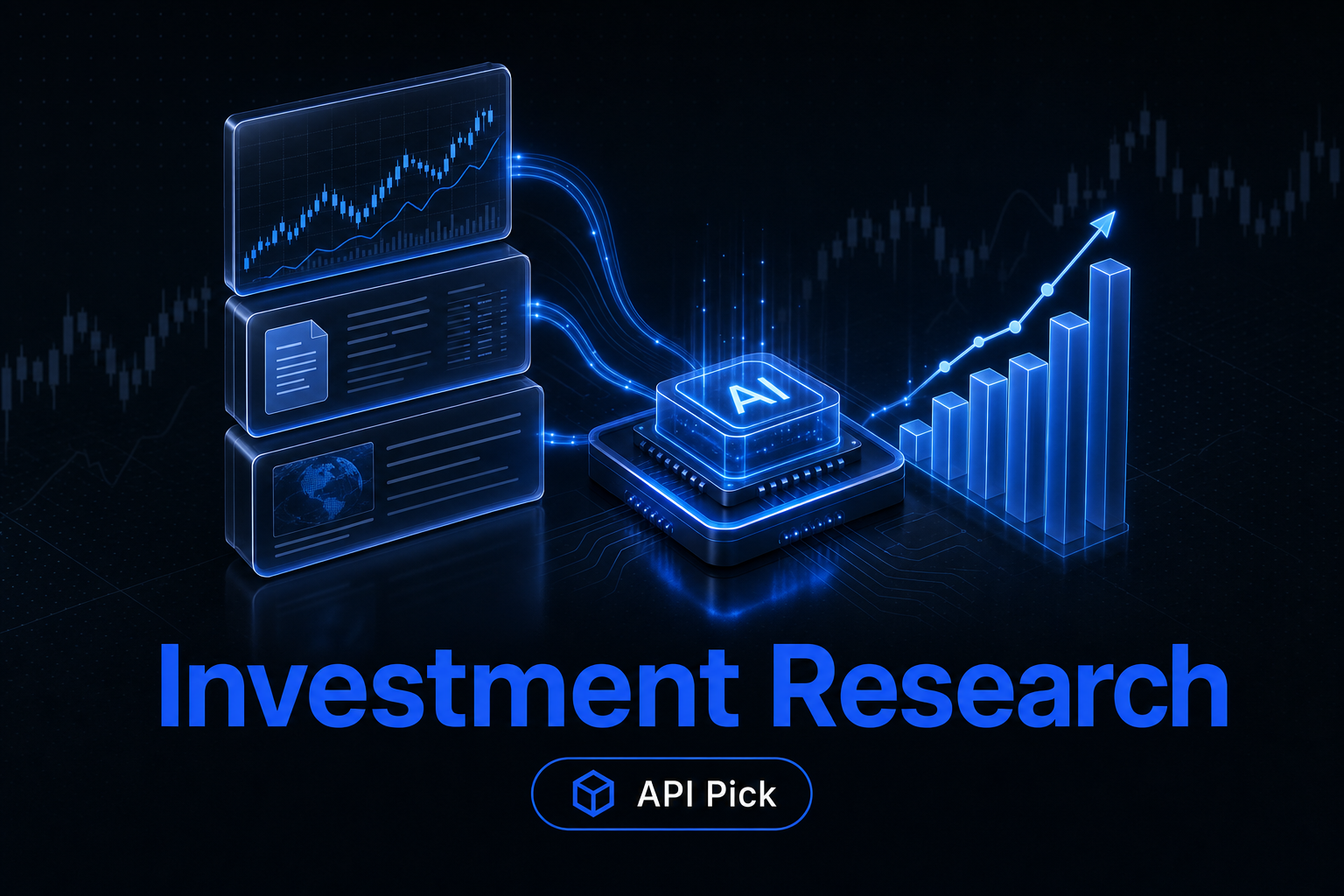
يحتاج وكيل الأبحاث الاستثمارية إلى خمس طبقات بيانات مختلفة — الأسعار والأساسيات والإيداعات والاقتصاد الكلّي والأخبار — كلّ منها عادةً مزوّد ومفتاح ومخطّط منفصل. إليك كيف توصِل الخمس جميعًا خلف مجموعة واجهات واحدة، مع شيفرة عاملة وحساب التكلفة.
الخلاصة
- •يحتاج وكيل مالي مفيد إلى خمس طبقات بيانات: الأسواق اللحظية (الأسعار)، أساسيات الشركات (البيانات المالية)، إيداعات SEC، المؤشّرات الاقتصادية، والأخبار. تركيبها من مزوّدين منفصلين يعني 5 عقود و5 مفاتيح و5 مخطّطات.
- •تعرض API Pick الخمس جميعًا كواجهات بحث JSON متّسقة — /search/markets و/search/financials و/search/sec و/search/economic و/search/news — إضافةً إلى /extract للمستندات الكاملة. مفتاح واحد، مُهيّأ مسبقًا لنداء الأدوات بنماذج اللغة.
- •نمط الوكيل: شغّل الواجهات ذات الصلة بالتوازي كأدوات، ادمج الـ JSON، ودع النموذج يستدلّ على بيانات مؤصَّلة بدل هلوسة الأرقام.
- •تسعير الأرصدة لا يُحتسَب إلا عند النجاح: markets 120، financials 200، sec 120، economic 50، news 15 للنداء. دورة بحث نموذجية متعدّدة الأدوات تكلّف ما دون $0.01–$0.10 بكثير حسب العمق.
- •البناء مقابل الشراء: تجميع Polygon + مزوّد أساسيات + SEC EDGAR + FRED + واجهة أخبار بنفسك أسابيعُ من التكامل و5 فواتير شهرية؛ مسار الواجهة الواحدة يومٌ واحد.
مشكلة الطبقات الخمس
اسأل نموذج لغة "هل NVIDIA باهظة الآن؟" وسيختلق بثقة نسبة سعر/ربح. الحلّ ليس نموذجًا أكبر — بل التأصيل. وكيل بحث يكسب الثقة عليه أن يسحب بيانات حيّة مستشهَدًا بها عبر خمس طبقات، ثم يستدلّ عليها:
- الأسواق — السعر الحالي والقيمة السوقية وكيف تحرّك. العملات المشفّرة والفوركس وصناديق المؤشّرات والأكثر تحرّكًا في اليوم عند الاقتضاء.
- الأساسيات — الميزانية العمومية وقائمة الدخل والتدفّق النقدي والأرباح الموزّعة وصفقات المطّلعين. طبقة "هل العمل سليم فعلًا".
- إيداعات SEC — عوامل مخاطر 10-K، تفصيل 10-Q، أحداث 8-K، لغة مكالمات الأرباح. البُعد النوعي الذي تفوته الأرقام.
- المؤشّرات الاقتصادية — الفائدة والتضخّم والتوظيف والناتج المحلّي من FRED وBLS والبنك الدولي وIMF. الخلفية الكلّية التي تجلس داخلها كل فرضية.
- الأخبار — المحفّز في وقته: تخفيض تصنيف، إطلاق منتج، إجراء تنظيمي.
تركيبها من مزوّدين منفصلين يعني خمسة عقود وخمسة مفاتيح واجهة وخمسة أنظمة لحدود المعدّل وخمسة مخطّطات استجابة عليك توحيدها قبل أن يلمسها نموذج. التكامل هو حيث تتعثّر مشاريع الوكلاء الماليين.
مجموعة واجهات واحدة، خمس طبقات
تعرض API Pick كل طبقة كواجهة بحث JSON متّسقة، فيتحدّث الوكيل إلى مفتاح واحد وشكل استجابة واحد:
- Markets Search — الأسهم العالمية والأمريكية، والعملات المشفّرة، والفوركس، وصناديق المؤشّرات، والصناديق، والسلع، والأسهم الأمريكية الأكثر تحرّكًا.
- Financials Search — الميزانيات العمومية وقوائم الدخل والتدفّق النقدي والأرباح الموزّعة وصفقات المطّلعين.
- SEC Filings Search — 10-K/10-Q/8-K، نصوص مكالمات الأرباح، إحصاءات الأسهم.
- Economic Data Search — FRED وBLS والبنك الدولي وIMF وUSAspending وDestatis.
- News Search — أخبار مُرشّحة بالتاريخ عبر كبرى المنافذ.
- Extract — اسحب إيداعًا كاملًا أو مقالًا إلى markdown نظيف حين لا يكفي المقتطف.
بنية الوكيل
سجّل كل واجهة كأداة. حين يَرِد سؤال، يقرّر الوكيل أيّ الطبقات يحتاج، ويناديها بالتوازي، ويدمج الـ JSON، ويستدلّ على النتيجة المؤصَّلة. سؤال عن رمز يصيب الأسواق + الأساسيات + الأخبار؛ وسؤال "كيف يتموضع القطاع" يصيب الاقتصاد + الأخبار + بضع شركات قابلة للمقارنة.
import asyncio, httpx, os

API = "https://api.apipick.com/v1"
HEADERS = {"x-api-key": os.environ["APIPICK_KEY"], "Content-Type": "application/json"}

async def search(client, path, query, **kw):
    r = await client.post(f"{API}/{path}", headers=HEADERS,
                          json={"query": query, **kw})
    r.raise_for_status()
    return r.json()["results"]

async def research(ticker: str):
    async with httpx.AsyncClient(timeout=30) as c:
        markets, fundamentals, filings, macro, news = await asyncio.gather(
            search(c, "search/markets",    f"{ticker} price and market cap"),
            search(c, "search/financials", f"{ticker} latest balance sheet and cash flow"),
            search(c, "search/sec",        f"{ticker} 10-K risk factors", end_date="2026-06-16"),
            search(c, "search/economic",   "US interest rates and inflation latest"),
            search(c, "search/news",       f"{ticker} latest news", end_date="2026-06-16"),
        )
    return {"markets": markets, "fundamentals": fundamentals,
            "filings": filings, "macro": macro, "news": news}

# Feed the merged JSON back to your LLM as grounding, with the source URLs,
# and ask it to synthesize — never to recall numbers.
context = asyncio.run(research("NVDA"))
تحمل كل نتيجة عنوان source. مرّر هذه إلى الإجابة النهائية كي يستطيع إنسان تدقيق كل ادّعاء — وكي يكون ناتج الوكيل قابلًا للاستشهاد، وهو ما يجعله مفيدًا في سير عمل حقيقي.
البناء مقابل الشراء
| تجمّعها بنفسك | API Pick | |
|---|---|---|
| المزوّدون / المفاتيح | ~5 (Polygon، أساسيات، EDGAR، FRED، أخبار) | 1 |
| أشكال الاستجابة | 5 لتوحيدها | شكل JSON واحد |
| الزمن حتى أوّل وكيل | أسابيع من التكامل | يوم واحد |
| الفوترة | 5 اشتراكات شهرية | لكل نداء، عند النجاح فقط |
| جاهز لنماذج اللغة | تهيّئ كلًّا منها مسبقًا | مقتطفات مهيّأة مسبقًا + عناوين URL للمصادر |
لنوع بيانات واحد، الذهاب المباشر معقول. لوكيل يحتاج الخمس جميعًا ويستكشف بلا توقّع، يشحن مسار الواجهة الواحدة في يوم ولا يفوتِر إلا حين ينجح النداء.
ما يفتحه هذا
تشغّل الأدوات الخمس نفسها أكثر من عمليات البحث عن الرموز: وكلاء موجزات موسم الأرباح، فحوص قطاعية مؤصَّلة في الأساسيات، تعليقات محافظ واعية بالاقتصاد الكلّي، ومساعدو عناية واجبة يقرؤون 10-K الفعلي عبر Extract. النمط دائمًا واحد — نداءات أدوات مؤصَّلة، استرجاع متوازٍ، تركيب على بيانات حقيقية مع مصادر مرفقة.
ابدأ بمفتاح مجاني (100 رصيد، دون بطاقة) ووصِّل الأدوات الخمس بإطار عمل الوكيل الذي تختاره. من هناك تصير المسألة هندسة موجّهات، لا سباكة.
الأسئلة الشائعة
ما البيانات التي يحتاجها وكيل الأبحاث الاستثمارية فعليًا؟
خمس طبقات. (1) الأسواق اللحظية — الأسعار والعملات المشفّرة والفوركس وصناديق المؤشّرات والأسهم الأكثر تحرّكًا، لسؤال «ماذا يفعل الآن». (2) الأساسيات — الميزانية العمومية وقائمة الدخل والتدفّق النقدي والأرباح الموزّعة وصفقات المطّلعين. (3) إيداعات SEC — نصوص 10-K/10-Q/8-K ونصوص مكالمات الأرباح للإشارات النوعية. (4) المؤشّرات الاقتصادية — FRED وBLS والبنك الدولي وIMF للخلفية الكلّية. (5) الأخبار — المحفّزات في وقتها. يفشل معظم الوكلاء لأن لديهم أسعارًا دون أساسيات، أو أساسيات دون سياق كلّي.
لماذا لا أنادي Polygon وFRED وSEC EDGAR مباشرةً فحسب؟
بإمكانك ذلك — ولنوع بيانات واحد لا بأس به. الألم أن الوكيل يحتاج الخمس جميعًا: أي خمسة مزوّدين، وخمسة أنظمة مصادقة، وخمسة أنظمة لحدود المعدّل، وخمسة أشكال استجابة عليك توحيدها قبل أن يستخدمها نموذج اللغة، وخمس فواتير. نهج الواجهة الواحدة يقايض علاوة صغيرة لكل نداء بمفتاح واحد وشكل JSON واحد وفوترة لا تُحتسَب إلا عند النجاح — وهو لوكيل يجري نداءات استكشافية متعدّدة الأدوات عادةً المسار الأرخص والأسرع بكثير للشحن.
كيف أتجنّب هلوسة نموذج اللغة للأرقام المالية؟
لا تدع النموذج يُنتج أرقامًا من الذاكرة أبدًا. اجعل كل مصدر بيانات أداة، وأرغِم الوكيل على نداء الأداة، ومرّر الـ JSON العائد إليه تأصيلًا. مهمّة النموذج أن يستدلّ ويركّب على قيم مسترجَعة، لا أن يستحضرها. استشهد بعنوان URL للمصدر من كل نتيجة كي يكون الناتج قابلًا للتدقيق — وهو أيضًا ما يجعل الإجابة جديرةً بثقة المراجع البشري.
هل الناتج صالح للتداول الفعلي أو لإسداء النصيحة؟
لا. ناتج واجهة الاسترجاع معلوماتي. يؤصّل استدلال المحلّل أو الوكيل في بيانات حقيقية؛ وهو ليس نصيحة استثمارية، ويجب ألّا يُستخدَم إشارةَ تداول آلية دون إنسان مؤهّل وضوابط مخاطر سليمة. عامِل الوكيل مسرِّعًا للبحث، لا متّخذًا للقرار.
كم تكلّف دورة البحث الواحدة؟
تُحتسَب الفوترة لكل نداء ناجح: markets 120 رصيدًا، financials 200، sec 120، economic 50، news 15 (1000 رصيد ≈ $1). دورة مركّزة تصيب markets + الأساسيات + الأخبار تكلّف ~335 رصيدًا (~$0.34)؛ دورة أخفّ كلّية+أخبار ~65 رصيدًا. لا تدفع إلا عند HTTP 200، فالنداءات الفاشلة أو الفارغة لا تكلّف شيئًا — وهذا مهمّ حين يستكشف الوكيل.
الواجهات البرمجية المستخدمة في هذا المقال

سارة تشوي هي الرئيسة التنفيذية لشركة API Pick. تكتب عن بناء واجهات برمجية جاهزة للإنتاج لوكلاء الذكاء الاصطناعي وسير عمل نماذج اللغة.